Fatal Dog Attacks in Italy (2009–2025): The Urgent Need for a National Risk Registry
December 2025 | by Iarussi F, Sessa F, Piccirillo S, Francaviglia M, et al.
A retrospective analysis of 54 fatal dog attacks in Italy from 2009 to 2025 found that molosser and bull-type breeds accounted for 69% of cases and 92.6% of attacks were inflicted by owned dogs.
Study highlights
- This study is a retrospective epidemiological analysis of 54 fatal dog attacks in Italy between 2009 and 2025. Italy has no centralized registry of such incidents, and official mortality statistics coded under ICD-10 category W54, "bitten or struck by dog," are not publicly accessible at a level of detail that would allow these deaths to be identified. Authors collected data from national and regional media archives, cross-verified, and organized into a comprehensive database.
- Adults over 64 were the most affected group with 23 deaths (42.6%), followed by adults aged 40 to 64 with 14 deaths (25.9%), and preschool-aged children 0 to 4 years with 12 deaths (22.2%). School-aged children and adolescents accounted for one death each. Thirty-two victims were male (59.3%) and 22 female (40.7%).
- Nearly all deaths were perpetrated by owned dogs. Fifty attacks (92.6%) involved owned dogs and only 4 (7.4%) involved strays. Among the 50 attacks by owned dogs, 28 (56%) were inflicted by a dog belonging to the victim and 22 (44%) by a dog belonging to a third party. The authors credit Italy's national stray control law for the low stray figure, and state that the current challenge lies in preventing aggression among owned dogs.
- Molosser-type dogs were involved in 22 of the 54 fatal events (40.7%), accounting for 33 individual dogs, with cane corsos and rottweilers the most frequently represented. Bull-type terriers were involved in 15 events (27.8%), accounting for 25 unique dogs. Together the two groups account for 69% of fatal attacks. The bull-type terrier figure is new. In an earlier Italian study covering 1984 to 2009, no fatal attacks at all were attributed to this subgroup. The first bull-type fatality in the current dataset occurred in 2017.
- Fatal attacks on infants received separate analysis. Of the 12 victims aged 0 to 4, ten were on the floor or at ground level when attacked and two were being held in the arms of an adult caregiver. Five incidents occurred while the child had been temporarily entrusted to relatives, and in seven cases at least one parent was present in the household. The authors conclude that close adult proximity alone does not reliably mitigate risk, and that escalation can occur despite direct supervision.
- Multi-dog attacks made up a substantial share of the total. Nineteen incidents (35.2%) involved a single dog, 15 (27.8%) involved two, and 20 (37%) involved three or more. The authors note that aggressive motivation can be socially facilitated, with the behavior of one dog lowering the inhibitory threshold of another, and that larger groups may show coordinated behavior including simultaneous targeting of different body regions and reduced responsiveness to human intervention.
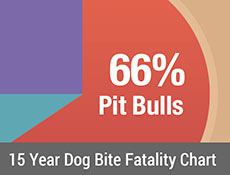
- The authors conclude that Italy needs a national behavioral risk registry integrating veterinary notifications, behavioral assessments and hospital injury records. They point to the United States as a comparison, noting DogsBite.org as one of the few publicly accessible repositories that systematically compile fatal dog attacks, and observing that no comparable database exists in most European countries.




DogsBite